


Bloemfontein was alive on Tuesday night. The vuvuzelas screamed, the flags waved, and the stage was set for one of African football’s fiercest rivalries — Nigeria vs South Africa. But when the dust settled, the so-called “star-studded” Super Eagles were left frustrated, their World Cup qualification hopes wobbling after being held to a 1–1 draw by a spirited Bafana Bafana.
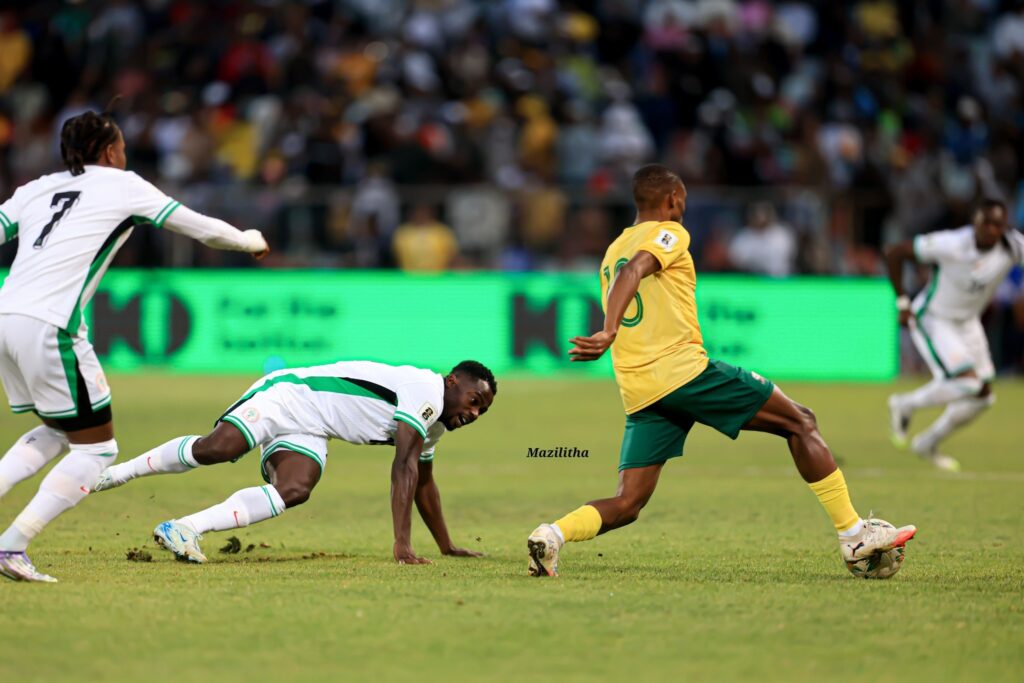
For Nigeria, this was supposed to be the night of revival. With a squad stacked with overseas-based talent, three points would have lifted their confidence and kept them firmly in the race for automatic qualification to the 2026 FIFA World Cup, which will be jointly hosted by the USA, Mexico, and Canada. Instead, what unfolded was a story of resilience, tactical discipline, and a reminder that reputation counts for little when the whistle blows.
Bafana’s Perfect Script
Hugo Broos and his men entered the clash with one mission: do not lose. Sitting top of Group C, South Africa knew that avoiding defeat would keep them ahead of the chasing pack — Nigeria, Rwanda, and Benin. And they delivered.
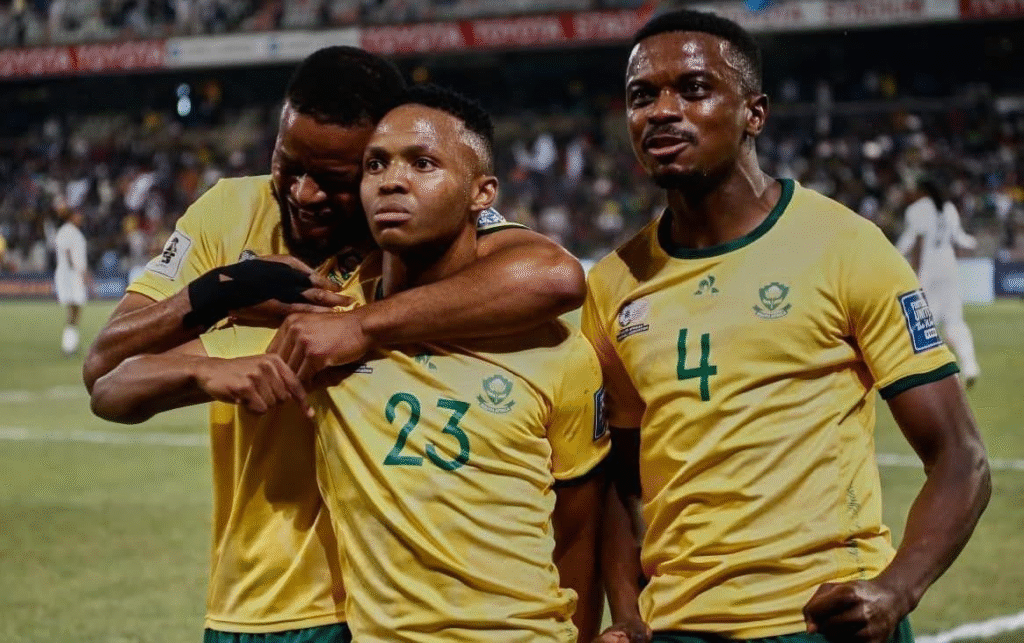
The opening goal summed up the night. After 25 minutes of relentless pressing, Nkotha burst down the flank, whipped in a dangerous ball, and forced Nigeria’s captain William Troost-Ekong into an own goal. It was not pretty, but it was effective — the kind of moment that rattles even the biggest of teams.
Nigeria hit back before the breakthrough Calvin Bassey’s header, a goal that carried controversy as Bafana players protested furiously. With no VAR to intervene, the referee’s decision stood. Yet even that lifeline could not spark the Super Eagles into life.
A Tale of Two Identities
This was more than just a football match. It was a clash of identities. On one side, Nigeria — a nation boasting pedigree, a proud football heritage, and a roster of European-based stars. On the other, South Africa — a squad with fewer household names but brimming with collective grit and belief.
Bafana did not just match Nigeria; they contained them. They frustrated their forwards, closed down spaces, and ensured that every Nigerian attack was met with resistance. To the home fans, every interception felt like a goal, every clearance a statement: “We are not afraid.”
Pressure on Chelle
For Nigeria’s coach Eric Chelle, the result poses uncomfortable questions. How does a team this talented continue to underperform on the big stage? The Super Eagles are not used to chasing shadows, and patience within the Nigerian Football Federation may be wearing thin.
Failing to qualify for the World Cup would not just be a sporting disaster; it would be a national wound. And if that nightmare becomes reality, Chelle’s future may be the first sacrifice.
The Rise of ‘TLB’ Mbokazi
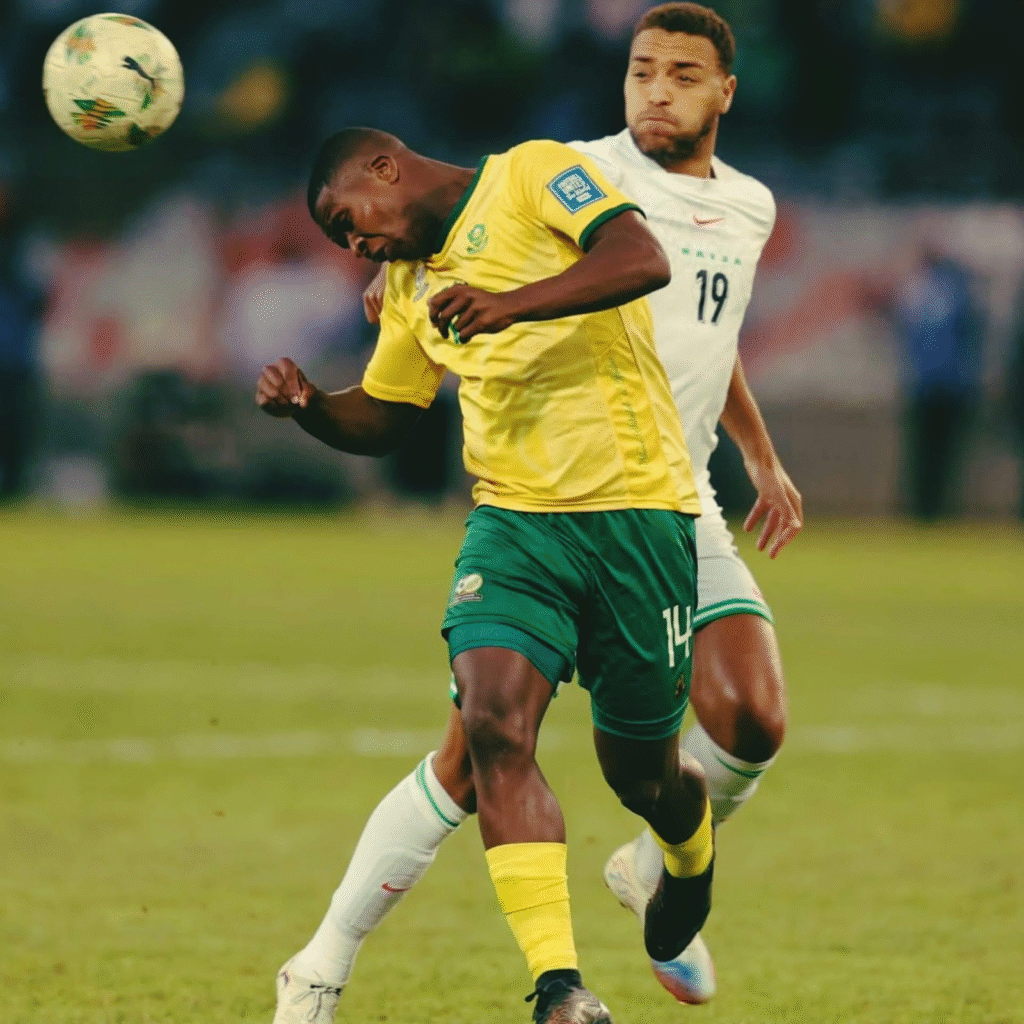
But while Nigeria wrestles with self-doubt, South Africa found a new hero. Nineteen-year-old Mbekezeli “TLB” Mbokazi — in just his third senior start — was named Man of the Match. Calm, composed, and commanding in defense, he played like a veteran, earning lavish praise from Broos.
“He’s a breed of defender I haven’t seen here since I arrived four years ago,” Broos said, even tipping the youngster for a move to Europe. For South African fans, Mbokazi’s emergence is not just a bright spark in this campaign but a glimpse into a promising future.
The Road Ahead
For now, Group C remains wide open. South Africa sits comfortably at the top, Nigeria stumble in pursuit, and every point feels heavier as the qualification race heats up.
This was not just another qualifier. It was a statement. South Africa proved that heart, strategy, and unity can outshine star power. Nigeria, meanwhile, return home with more questions than answers.
In the end, the African derby once again lived up to its billing — tense, dramatic, and unforgettable.