


From Queenstown to the digital public square, Amahle-Imvelo Jaxa is helping a new generation engage with politics, current affairs and global issues — one “Howzit” at a time.

There is something unmistakably South African about hearing a simple “Howzit” before a breakdown of the latest political headline, global crisis or social issue. For Amahle-Imvelo Jaxa, better known as Jaxx Amahle, the greeting has become more than an introduction. It has become the beginning of a conversation about politics, culture and the world around us.
Born in Queenstown in the Eastern Cape and raised between the city and the rural home of her grandparents, Jaxa’s journey into political communication is rooted in curiosity and a childhood belief that she would one day be president. She grew up riding bicycles and climbing trees, while spending weekends in eJojweni milking cows, cooking outdoors and experiencing a very different rhythm of life from the suburbs. That contrast now shapes the perspective she brings to her work.
From Entrepreneurship to Political Storytelling

Jaxa studied a BA in Politics, Philosophy and Economics through the University of South Africa, and holds an Honours degree in International Relations and Affairs from the University of the Witwatersrand — an academic foundation that informs how she approaches questions of power, governance, economics and global affairs. Today she describes herself as a multimedia storyteller and political analyst working at the intersection of South African current affairs, geopolitics and digital culture.
But her contribution has not come through a traditional newsroom. It has come through the phone screen. Before she was widely recognised for current-affairs content, Jaxa built a career in South Africa’s creative and events industries. She was part of Until Until, an entertainment and events company, and became a familiar figure in Johannesburg’s cultural and nightlife spaces. That experience in building communities and creating experiences would later become central to her digital work.

Instead of presenting politics in the formal language of institutions, she explains what is happening in a way that is conversational, visual and culturally familiar — a significant shift in a media environment where younger audiences encounter news on social platforms, not on television, radio or newspapers.
Making Political Language Feel Human
One of Jaxa’s most visible contributions is how she translates political language into everyday conversation. Parliamentary debates, policy announcements, elections and international relations can feel distant from ordinary life. Her content closes that distance by connecting political developments to lived realities.
Her podcast, Jaxx of All Trades, has expanded that approach beyond short-form video. The platform covers politics, ideas, global affairs, business, pop culture and the digital world through conversations and accessible explainers. Recent episodes have covered South Africa’s local elections, party manifestos, coalition governments, the 2026 Budget Speech, digital activism and international affairs.
That range matters because it positions political literacy as something beyond election season. Politics becomes about municipal services, the economy, technology, identity and everyday life.
A New Space for African Youth and Civic Conversation
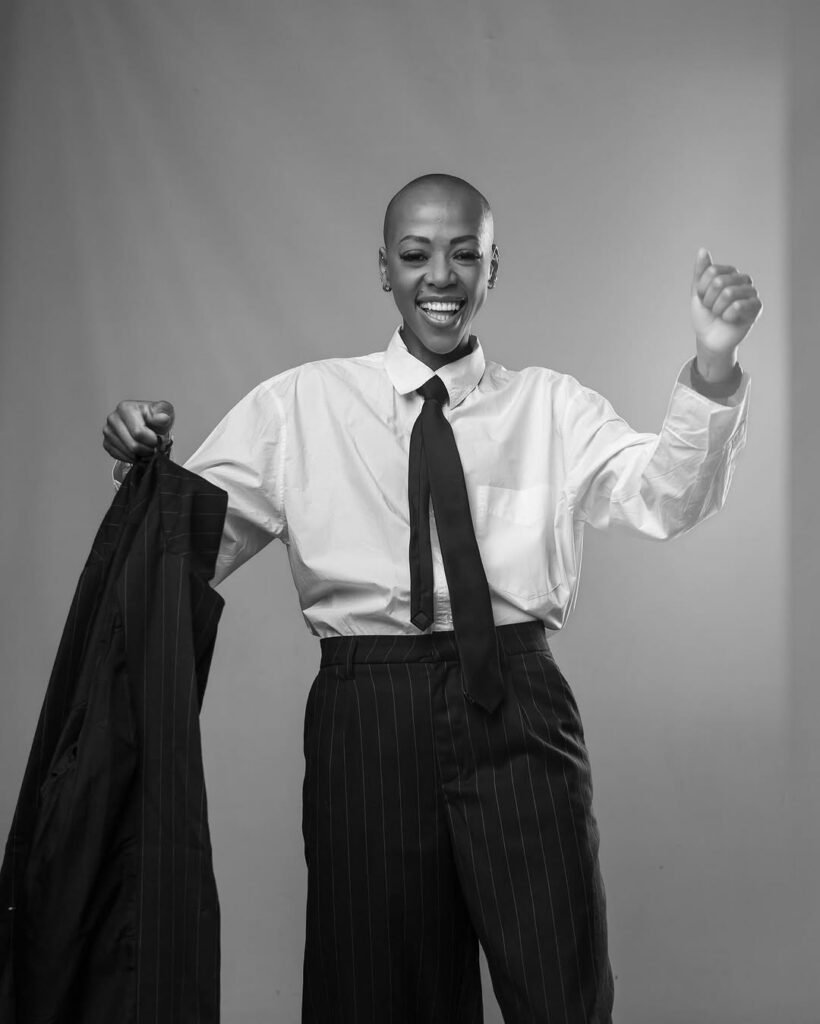
Jaxa’s work sits within a larger transformation in African media. Young Africans are increasingly using social platforms not just to consume information, but to debate politics, challenge narratives and participate in public life.
At a CTRL+J Africa conference on technology and journalism in the Global South, she spoke about the role of young digital creators in challenging traditional media narratives and building new models of information sharing. The conference report noted her argument that creators can complement traditional journalism while amplifying voices that might otherwise receive less attention.
It is an important distinction. Her role is not to replace journalism, but to occupy a different space in the information ecosystem one where explanation, personality, cultural context and digital accessibility bring politics to audiences who would not seek it out in conventional media.
That has taken her beyond South Africa. In 2026, she was a speaker at UNESCO’s World Press Freedom Day programme in Lusaka, Zambia.
From Queenstown to Paris: AI, Power and the Public
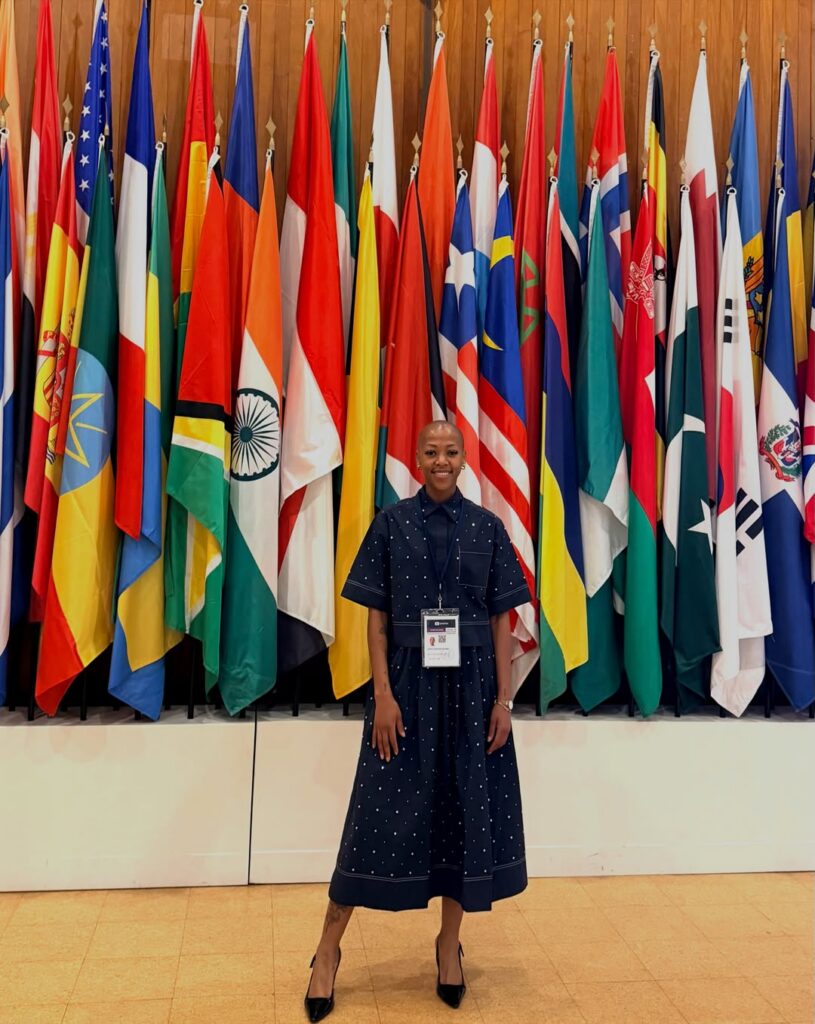
That global conversation has most recently taken her to Paris, France.
In a post from UNESCO Headquarters pictured in front of the hall of member-state flags Jaxa reflected on her participation in a UNESCO dialogue on artificial intelligence and democracy.
“If AI is going to shape the public, then the public must have a say in shaping AI,” she wrote.
She argued that AI is not only about innovation, but about power: who builds these systems, whose data shapes them, who benefits, who is excluded, and who is accountable when harm is done.
“We need an AI future that is not simply efficient, but ethical. Not simply advanced, but accessible. And not simply designed for people, but shaped with them,” she said, thanking UNESCO for centring human rights, dignity, public participation and democracy in the conversation.
The moment captures the evolution of her work: from explaining South Africa’s Budget Speech on TikTok to standing in a multilateral forum debating how Africa and the world should govern emerging technology.
Politics in a Distinctly African Voice
What makes Jaxa’s work compelling is the cultural language she uses. The now-familiar “Howzit” is informal, local and instantly recognisable. It removes the distance often associated with political commentary and creates an entry point into subjects that can feel intimidating.
Her content also recognises that African audiences are not a monolith. In 2025, she joined a Nelson Mandela Foundation dialogue on South Africa’s “born free” generation, exploring questions of freedom, youth and the country’s future work the Foundation has highlighted as engaging young audiences with current affairs, politics and culture.
The Future of Political Storytelling
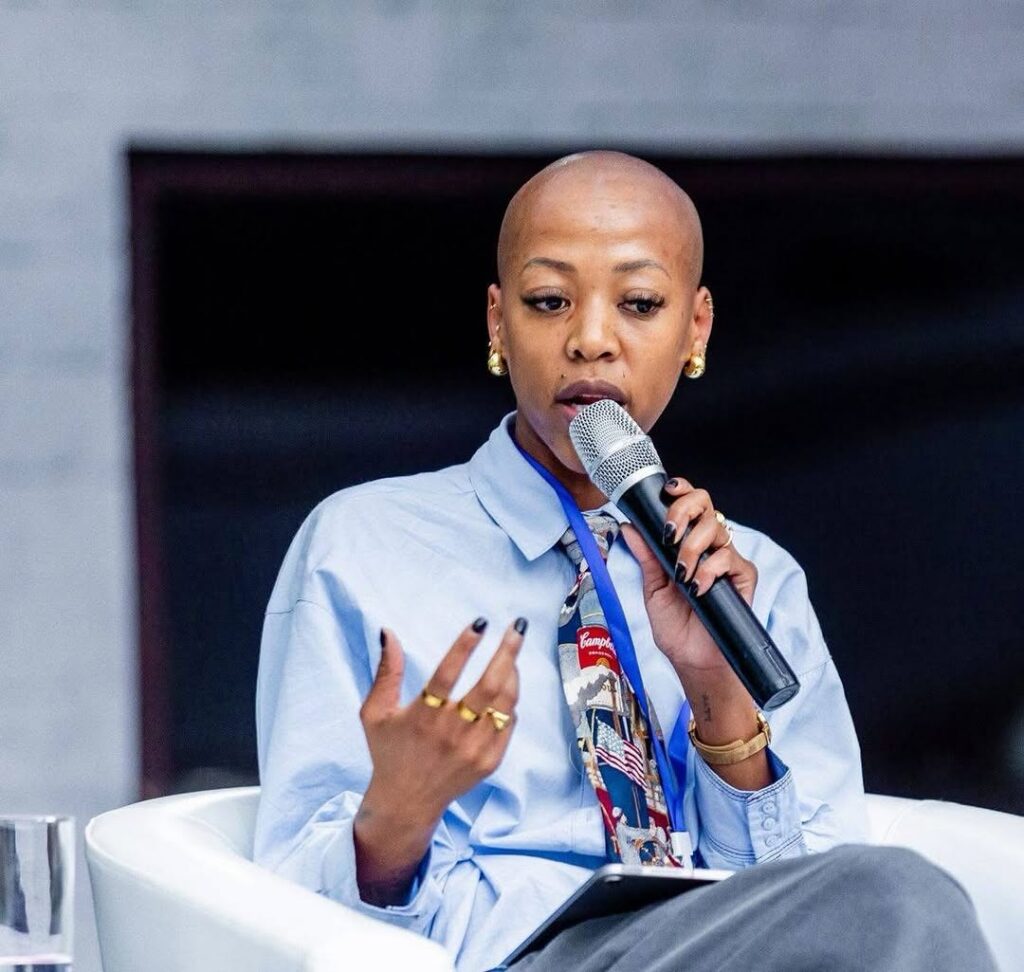
Jaxa’s career shows how the boundaries between creator, commentator, entrepreneur and media personality are blurring. Her training , a BA in Politics,Philosophy and Economics and an Honours in International Relations from Wits gives her the framework for complex political questions, while her experience in entertainment and digital media gives her a different way to communicate them.
At a time when young audiences are navigating information overload, the challenge is not just getting people to consume more news. It is helping them understand what they are seeing, question it, and recognise how political decisions connect to their own lives.
That is the space Jaxx Amahle has claimed.
From the Eastern Cape to Johannesburg, from events and entrepreneurship to UNESCO stages in Lusaka and Paris, her journey reflects a changing African media landscape — one where political discussion can begin with a camera, a phone and a familiar “Howzit.”